


If you've ever browsed a particular color of cardstock in our online shop and thought, “Which one am I actually supposed to use?” — you’re not alone. Even seasoned paper crafters sometimes get tripped up by paper weight, texture, coating, and all the other little details that make one cardstock work perfectly for a project… and another fall flat.

The good news? Once you know what all these differences mean, choosing the right cardstock becomes much easier — and the cardstock will add to your project results, instead of making things harder. Whether you’re rolling delicate paper flowers, cutting intricate layered mandalas, making handmade invitations, or finishing an important scrapbook layout, the perfect cardstock can make all the difference in your finished project.
This guide breaks everything down in simple terms — with real cardstock recommendations based on what actually works. By the end, you’ll be able to choose cardstock confidently for any type of cardstock craft.
At 12x12 Cardstock Shop, we're paper nerds, and we could talk about paper all day long, so let's do this!
1. Cardstock Basics Every Crafter Should Know
Before we match cardstock to specific craft types, let’s walk through a few basics that make everything else make sense.
1.1 Paper Weight (in Pounds): What Those Numbers Actually Mean
You’ve probably seen cardstock labeled as 65 lb, 80 lb, or 100 lb — but what do those numbers really mean? These numbers are sometimes also displayed as 65#, 80# or 100#, but it all means the same thing.
A simple way to think about it:
- Lower weight = thinner and more flexible
- Higher weight = thicker and sturdier
Common cardstock weights:
65 lb (65#)
Light and flexible. Great for rolled flowers and easy folding. Not ideal for card bases or scrapbook bases.
80 lb (80#)
The most versatile all-purpose weight. Perfect for Cricut or Silhouette machines, card layers, scrapbook pages, and large paper flowers.
100 lb+ (100# +)
Thick, and sturdy, adding stability to projects. Beautiful for card bases, cake toppers, banners, and structural paper crafts. Usually required scoring for clean folds.
Think of 80 lb cardstock as the “Goldilocks” weight — not too thick, not too thin, just right for most crafting, but the other weights certainly have their purposes too.
1.2 GSM — Another Way to Talk About Paper Weight
GSM means “grams per square meter.” Some brands use GSM instead of pounds, but they’re both just different ways of measuring thickness. The way that GSM is calculated is scientific and slightly confusing, but it doesn't really matter how it's calculated. It matters much more what those weights mean.
Quick cheat sheet:
- 65 lb ≈ 176 gsm
- 80 lb ≈ 216 gsm
- 100 lb ≈ 270 gsm
The higher the GSM, the thicker the cardstock. You’ll see both pounds and GSM measurements depending on the brand and where it’s manufactured.

1.3 Paper Texture & Finish Options
Different textures make a huge difference in how your project looks and behaves. Here are the major finishes you’ll find at 12x12 Cardstock Shop:
- Smooth Cardstock – Best for stamping, printing, heat embossing, and embossing in embossing folders. A great everyday surface.
- Canvas / Linen / Grasscloth Textured Cardstock – Adds subtle dimension. Perfect for scrapbooking, layering, and die-cut elements. Can interfere with very detailed stamping.
- Pearlescent / Shimmer Cardstock – Soft shine and elegant finish. Gorgeous for weddings, florals, and luxury projects. Prints differently depending on the coating. Adds an elevated feel to cardstock crafts.
- Glitter Cardstock – High sparkle and lots of shine. Best for accents and layers, not for folding or tiny intricate cuts.
- Foil Cardstock - Adds sparkle to cardstock projects. Great for die cutting and layering. Looks especially cool as a layer under card sentiments.
- Holographic Cardstock – Reflective and eye-catching. Best in small pops as a specialty accent.
- Vellum – Lightweight and translucent. Stunning for overlays, florals, and soft layering. Looks beautiful as die cuts, but not ideal for card bases or anywhere you need durability and stability.
- Kraft Cardstock – Rustic, natural look. Great for stamping and tags, and holds shape well for boxes and favors.
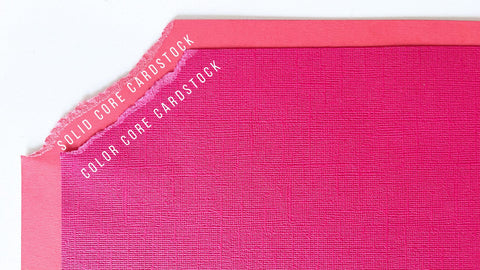
1.4 Solid Core vs. White Core
This is a big one — especially for machine cutting, paper flowers, and layered art.
Solid Core
- Color runs all the way through. Paper is dyed in the pulp form, then pressed into sheets so core and top layer are exactly the same.
- No white edges when you cut or tear.
- Best for rolled flowers and anything with visible edges.
Color Core
- Color runs all the way through, though paper is dyed while in sheet form, so the inside may be a slightly lighter color than top of paper.
- No white edges when you cut or tear.
- Best for rolled flowers and anything with visible edges.
Learn more about the difference between solid core and color core paper.
White Core
- Outside is colored, inside is white.
- Edges show when cut or torn.
- Can be used intentionally for distressing techniques.
Our Encore Paper line at 12x12 Cardstock Shop is color core, which gives it a beautifully finished look in layers and cuts.
1.5 Cardstock Sizes: 12×12 vs. 8.5×11
12×12 Cardstock
The scrapbooker’s standard. Great for layouts and large die cuts as it matches the size of most electronic cutting machine mats.
8.5×11 Cardstock
Perfect for cardmaking and printing. A folded piece of 8.5x11 cardstock makes two A2 sized handmade cards. Fits most home printers.
Most crafters keep a mix of 12×12 for scrapbooking and larger designs, and 8.5×11 for cards and print work.
2. Choosing the Right Cardstock for Different Types of Crafting
Now let’s get into the fun part: pairing the right cardstock with the right craft.

2.1 Cardmaking
Cardmakers love cardstock that folds cleanly, stamps well, cuts beautifully, and can hold lots of embellishments and still stand up. Nobody likes a saggy card! Here's our recommendations for cardstock for handmade cards.
Best cardstock for card bases:
- Use 100 lb (or similar weight) cardstock for stability and a professional feel. This allows you to add cardstock layers, buttons, and more to your handmade card.
- Recommendation: Try Bazzill Card Shoppe for handmade card bases.
Best cardstock for layers & die cuts:
- Use 80 lb cardstock in smooth or textured finishes.
- Recommendation: Try Encore Textured Cardstock or Encore Smooth Cardstock.
Best cardstock finishes for cardmaking:
- Smooth – perfect for stamping and sentiment panels.
- Textured – great for background layers and added dimension.
- Pearlescent, glitter or foil – beautiful for layers and diecut accents.

2.2 Scrapbooking
Scrapbookers typically want cardstock that’s strong enough to hold photo and embellishment layers, and has archival safe qualities.
Best cardstock for scrapbooking:
- 12×12 cardstock is the typical size of most scrapbook albums, but other sizes of scrapbook albums exist. The benefit of 12x12 inch cardstock is that it can be cut down to smaller sizes as well.
- 80 lb cover weight as a great standard for pages and die cuts. That is sturdy enough for layers, but afforable.
- Acid-free / lignin-free so your layouts stand the test of time. Archival safe paper means the acidity lever is neutral so the papers won't yellow or become brittle over time.
- Recommendation: Try Encore Textured Cardstock. It's 80 lb and acid/lignin free.
Canvas, linen, and other textures are favorites for scrapbookers because they add beautiful, subtle dimension to backgrounds and layers.

2.3 Cricut, Silhouette & Other Cutting Machines
Machine cutting is where paper choice really matters. The difference between a perfect cut and a shredded edge often comes down to weight, texture, and manufacturing process.
Best cardstock weight for Cricut crafts:
- 65 lb - 110 lb cardstock is best for cutting machines like a Cricut or Silhouette. I know that wide range may be surprising, but if you can dial in the cardstock cut settings, you can cut a wide range of materials. We covered how to determine cardstock cut settings in a YouTube video, so give that a watch if you need more details.
- Lighter than 65 lb can de difficult to cut especially if it is fibrous. You can cut vellum on a Cricut though with the right settings.
Best cardstock texture for Cricut crafts:
- Smooth cardstock tends to cut better than textured cardstock in most cases. The exception is Encore Textured Cardstock which was developed for cutting machines.
Manufacturing/Special Finishes:
- Coated paper can be difficult to cut. The plastic coating may be applied as a layer and when you attempt to cut it, the layers can peel up.
- Fibrous paper can be difficult to cut. We love the look of handmade paper, but those natural fibers that give it a handmade feel can stop a blade in it's tracks.
- Paper designed for cutting from the start is your best bet! That is exactly the case with Encore Textured cardstock. It has a canvas finish and a color core and cuts beautifully, even on intricate designs, because it was made to do so.
- Glitter cardstock is hit or miss when it comes to cutting on a Cricut or Silhouette machine. But the good news is, Encore paper has a solution! Our Glitter Luxe Glitter Cardstock line is made for die cutting and it cuts amazing on your electronic cutting machine or with metal dies.
Recommendations: Try Encore Textured Cardstock made for cutting, Encore Dazzle for Pearlescent cardstock, or Glitter Luxe for Glitter accents.

2.4 Layered Paper Crafts (Shadow Boxes, Mandalas, Large Decor Pieces)
For layered designs, crisp edges are everything. The layers themselves become the “art,” so you want paper that cuts cleanly and looks great from every angle. Mixing in specialty papers to layered designs is especially stunning.
Best cardstock for layered paper projects:
- Foil cardstock looks beautiful layered under larger layers (especially gold foil - we simply can't get enough).
- Pearlescent shimmer cardstock adds elegance to your projects.
- Glitter cardstock catches the light like nothing else consider it for large layers or small accents.
Solid core really shines here because the edges are just as pretty as the surface. White core cardstock is not ideal for layered designs because those white edges can detract from the finished product.

2.5 Paper Flowers (Rolled, Large Decor Flowers & Everything In-Between)
Best cardstock for rolled flowers:
Rolled flowers need flexibility so they can curl and shape without cracking.
- Use 65–80 lb cardstock.
- Choose solid core so your flower edges are colored, not white.
- Either smooth or lightly textured cardstock works well.
- Recommendation: Try Pop-Tone cardstock
Best cardstock for large paper flowers:
Large florals are more forgiving and can handle slightly thicker cardstock.
- 80 lb cardstock in textured or smooth finishes is ideal for paper flowers. It's thin enough to be pliable for shaping, but thick enough to hold it's shape once you've got your flower petals curled and shaped. Recommendation: Try Encore Textured cardstock.
- Pearlescent cardstock adds a soft, elegant sheen. Look for pearlescent cardstock with a mica sheen on both sides of the cardstock. Recommendation: Try Encore Dazzle Cardstock.
- Avoid very heavy papers (over 100 lb) for petals — they can be hard to curl and shape.
Vellum Flowers
Vellum flowers are delicate, airy, and absolutely stunning if handled gently. Vellum curls beautifully with a soft roll and is perfect for weddings and elegant décor.
2.6 Invitations, Stationery & Printing
When printing on cardstock (especially for invitations), you want a paper that not only looks beautiful but also behaves well in your printer.
Laser-friendly papers:
- Pearlescent shimmer cardstock
- Smooth 80 lb cardstock
- 100 lb smooth cardstock for a more premium feel. Do a test first though, as some printers have a hard time feeding thicker papers through.
Inkjet-friendly papers:
- Smooth cardstock is your best bet.
- Avoid heavily coated shimmer papers, which can cause ink to pool or smear.

2.7 Boxes, Party Favors & Dimensional Projects
Structural projects like treat boxes, favor boxes, and dimensional paper projects need cardstock that can hold its shape and survive being handled.
Best cardstock weights for Paper Boxes:
- 80 lb cardstock for smaller boxes or dimensional projects with lots of folds and tabs. Recommendations: Try Encore Textured Cardstock or American Crafts Cardstock.
- 100 lb cardstock for large or heavy-duty boxes, cake toppers, and banners. If you intend to fill your box with heavier items, it's important that you use a sturdy paper. Make sure to score your fold lines before folding 100 lb cardstock. Recommendation: Try Bazzill Card Shoppe.
Papers to avoid for paper boxes:
- Glitter cardstock is typically too stiff to fold neatly unless it is a very simple design.
- Thin papers like vellum or lightweight scrapbook papers are too thin to use for paper boxes as they have no support to hold items you place inside. Use vellum for lids or accents on your paper box instead.
2.8 DIY Wedding Invitations
The key to elegant DIY wedding invitations is starting with the right cardstock base. Choose a cardstock that just looks special before you even print anything on it.
Best cardstock weight for DIY wedding invitations:
- 100 lb weight cardstock or higher is best for wedding invitations as these are typically just single layer projects.
Best cardstock textures for DIY wedding invitations:
- Pearlescent Cardstock is a beautiful starting point for handmade wedding invitations, even if you choose something subtle like white pearlescent cardstock. If you're using an inkjet printer, be sure and test print to make sure the paper you've chosen accepts ink well. Recommendations: Encore Dazzle or Neenah Stardream.
- Elegant Textured Cardstock like those used in high end letterpress projects instantly elevates handmade invitations. Recommendations: Neenah Grana Grossa.
3. Specialty Cardstock Types & When They Shine
3.1 Glitter Cardstock
- Best for card accents, cake toppers, and die cut elements.
- Use as a layer behind a focal point or cut someone's name from glitter cardstock for personalization.
-
Not ideal for folding or fine, intricate cuts.
- Not ideal for scrapbooks and memory keeping projects as many glitter cardstocks are not archival safe.
- Recommendation: Try Glitter Luxe Glitter Cardstock
3.2 Pearlescent & Shimmer Cardstock
- Soft, elegant shine that’s perfect when you need an elegant touch such as for DIY wedding invitations, wedding cards, DIY wedding decor and more.
- Beautiful as accent layers in shadow boxes and on handmade cards.
- Gorgeous paired with wood grain papers as the contrast of elegant and rustic is beautiful.
- Some shimmer papers behave differently in inkjet printers, so test first.
- Recommendations: Try Encore Dazzle Cardstock (smooth) or Encore Shimmer Cardstock (textured).

3.3 Holographic Cardstock
- Very high impact and eye-catching.
- Wonderful for birthday accents, party décor, and fun focal pieces.
- Best used in small doses so it doesn’t overwhelm the design.
- Recommendation: Try Encore Holographic Cardstock.
3.4 Vellum
- Translucent and airy, great for overlays and layered effects.
- Beautiful in delicate flowers and soft, ethereal projects.
- Great for peek thru elements like windows on a dimensional paper house or the top layer on a shaker card.
- Recommendation: Try Encore Translucent Vellum.
3.5 Kraft Cardstock
- Rustic, natural, and perfect for farmhouse or organic looks.
- Sturdy enough for tags, boxes, and labels.
- Looks great when stamped and colored or inked with ink pads
- Recommendation: Try Krafty by Core'dinations.

3.6 Foil Cardstock
- Catches the light and adds visual interest to projects.
- Use as layers or as die cut accents. We love card sentiments cut from foil cardstock.
- Comes in both Matte and Mirror finish. If you will be photographing your finished project opt for matte foil cardstock, as mirror foil can be hard to photograph.
- Recommendation: Try Encore Foil Cardstock.
4. Common Cardstock Mistakes (And How to Avoid Them)
Even experienced crafters run into these issues, so if you see yourself in this list, you are in very good company.
-
Using textured cardstock for detailed stamping
Ink pools in the texture and stamps look blotchy.
Fix: Use smooth cardstock for crisp stamped images. -
Cutting the wrong cardstock for intricate SVG files
Very thin cardstock or cardstock not made for cutting can tear on tiny corners.
Fix: Use cardstock made or cutting, like Encore Textured Cardstock. -
Over-gluing layers
Too much liquid glue can warp or wrinkle cardstock.
Fix: Use a thin layer of adhesive, tape runners, or foam squares when possible. -
Ignoring core type
White-core edges can distract in layered designs.
Fix: Use solid core cardstock when you want colored edges. -
Folding without scoring
Heavy cardstock can crack when folded freehand.
Fix: Score thick cardstock before folding to get smooth, clean creases. -
Glue shows through Vellum
Fix: Strategically place adhesive on vellum so that top layers cover the adhesive.
5. Quick Reference Chart
Sometimes it’s helpful to see everything at a glance. Here is a quick reference chart you can come back to whenever you’re not quite sure what to use.

6. Conclusion
At the end of the day, the “best” cardstock is simply the one that helps your creative vision come to life. Whether you’re rolling tiny florals, stamping a crisp card front, building a dimensional paper house, or cutting an intricate mandala, the right cardstock makes your crafting easier and your results more beautiful.
Use this guide to help match your cardstock craft with the perfect paper — and then have fun exploring all the colors, textures, and finishes waiting for you at 12x12 Cardstock Shop. Your projects will look amazing, and you’ll feel more confident than ever choosing the right cardstock for every crafty idea that comes your way. 12x12 Cardstock Shop has over 4000 different cardstock options for you to choose from!


Incredibly helpful! Straightforward info and great organization. Thank you.
This information is extremely helpful! I can now understand why some of my projects have not turned out as I pictured. Thank you so much!
Leave a comment